Modern Intellectual Property Rights: A Simple 2026 Guide
A Simple Guide to Modern Intellectual Property Rights: Navigating the 2026 Landscape
In the rapidly evolving digital world of 2026, the concept of “owning an idea” has shifted from physical blueprints to intangible strings of code and AI-generated outputs. Intellectual property (IP) refers to the legal rights resulting from intellectual activity in the industrial, scientific, literary, and artistic fields. Whether you are a budding entrepreneur launching a tech startup or a student researching the legalities of the metaverse, understanding modern IP is no longer optional—it is a survival skill for the digital economy. As global markets become more interconnected, the way we protect, share, and monetize innovation determines who succeeds and who gets left behind in the competitive international arena.
The complexity of modern IP frameworks often leaves students feeling overwhelmed, especially when trying to balance original research with shifting global regulations. This is why many students look for reliable college assignment help from established platforms like myassignmenthelp to ensure their case studies on patent law or digital trademarks meet the high standards of 2026 academic rigors. By leveraging professional insights, learners can better grasp how “fair use” applies to training data and generative AI, which are among the most debated topics in contemporary legal classrooms. Navigating these waters requires a mix of historical legal understanding and an eye for future technological trends that are reshaping courtroom battles daily.
The Four Pillars of Modern Intellectual Property
To understand the current landscape, we must first look at the four traditional pillars of IP, which have all been “upgraded” for the digital age. These pillars serve as the foundation for protecting everything from a brand’s logo to a life-saving medical invention.
1. Trademarks in a Virtual World
Trademarks protect symbols, names, and slogans used to identify goods or services. In 2026, this has expanded into the virtual realm. Major brands now trademark their logos for use on digital apparel in gaming environments and metaverses. “Trade dress” now includes the specific “look and feel” of a website’s user interface, protecting companies from digital clones. We are seeing a rise in “sensory trademarks,” where specific sounds or even haptic feedback patterns associated with a digital device are registered for protection.
2. Copyright and the AI Dilemma
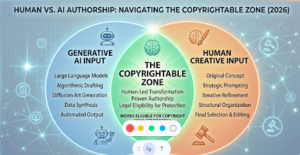
Copyright protects original works of authorship, such as books, music, and software code. However, the rise of generative AI has created a “gray area” that legal experts are still untangling. If an AI creates a piece of art based on a prompt, who owns the copyright? Current 2026 rulings generally suggest that “human authorship” is still a requirement for full protection, meaning creators must prove significant human intervention in the AI’s output to claim it as their own. This has led to the emergence of “Prompt Engineering” as a potentially copyrightable skill, provided the human input is creative and transformative enough.
3. Patents: From Hardware to Algorithms
Patents provide exclusive rights for inventions. While we traditionally think of physical machines, modern patents frequently cover complex algorithms and biotechnological breakthroughs. The “Madrid Protocol” has become even more vital this year, allowing inventors to seek protection in multiple countries through a single application, which is essential for global tech scaling. In the 2026 landscape, we see a surge in “Utility Patents” for software that manages decentralized finance (DeFi) and sustainable energy grids.
4. Trade Secrets and Data Governance
A trade secret is any confidential business information which provides an enterprise a competitive edge. In 2026, “Data Governance” is the new face of trade secrets. How a company cleans, labels, and structures its proprietary data to train its private AI models is now one of its most guarded assets. This information is protected by strict non-disclosure agreements (NDAs) and advanced cybersecurity protocols that go far beyond traditional office security.
Table: Comparison of Modern IP Rights
| Feature | Trademarks | Copyright | Patents | Trade Secrets |
| Protects | Brand Identity (Logos, Names) | Original Creative Works | Inventions and Processes | Confidential Business Info |
| 2026 Focus | Metaverse & Digital Assets | AI-Generated Content | Green Tech & Algorithms | AI Training Data Sets |
| Duration | Indefinite (if renewed) | Life + 70 Years | 20 Years | Indefinite (if secret) |
| Registration | Required for full rights | Automatic (usually) | Required (strict) | None (must stay secret) |
Why IP Rights Matter for the 2026 Entrepreneur
Protecting your ideas is about more than just avoiding theft; it is about building tangible value. For a modern business, IP is an asset that can be sold, licensed, or used as collateral for loans. Without a clear IP strategy, a startup risks losing its unique selling proposition (USP) the moment it enters a competitive market like Singapore, Australia, or the UK. Investors in 2026 are looking for “IP Moats”—legal barriers that prevent competitors from easily copying a successful business model.
Navigating these intricacies is particularly challenging for those pursuing a degree in legal studies or business management. When students face tight deadlines on complex case analyses involving international jurisdictional conflicts, seeking professional Law Assignment Help ensures that their arguments on cross-border enforcement and WIPO 2026 trends are both accurate and professionally structured. This support allows students to focus on the broader implications of law while ensuring their technical citations are up to date with the latest global treaties.
The Concept of Information Gain in Intellectual Property
In 2026, Google and other search engines reward “Information Gain”—the act of providing a fresh perspective or unique data that wasn’t previously available. This concept is mirrored in IP law through the requirement of “Non-Obviousness” in patenting. To get a patent, your invention cannot just be a logical next step; it must represent a significant leap in understanding or utility.
The Lifecycle of an Idea
- Creation: Utilizing AI and human creativity to solve a specific problem.
- Audit: Checking existing databases (WIPO, Google Patents) to ensure the idea is truly unique.
- Protection: Filing for the appropriate IP rights (Patents for tech, Trademarks for branding).
- Monetization: Licensing the technology to other firms or using it to launch a product.
- Enforcement: Using automated digital tools to scan for infringements online and taking legal action.
5 Emerging IP Trends to Watch This Year
The year 2026 has brought several distinct shifts in how we view intellectual property globally:
- NFTs and Smart Contracts: While the “hype” of digital art has settled, the technology behind NFTs is now used for “Smart IP.” This allows creators to receive automatic royalties every time their digital work—be it a blueprint or a song—is resold or used.
- Climate Tech Patent Fast-Tracking: To combat global warming, many patent offices (including the USPTO and EPO) have introduced “Green Channels” to speed up the approval process for eco-friendly inventions, reducing waiting times from years to months.
- Right to Repair vs. IP: There is a growing legal tug-of-war between tech giants protecting their hardware designs and consumers’ rights to fix their own devices. This has sparked new “Fair Repair” laws that limit how much a company can use IP to monopolize the repair market.
- Sovereign AI Protection: Nations are now treating large language models (LLMs) as “National IP.” This has led to new export controls on specific datasets and algorithms deemed vital to national security and economic stability.
- Digital Identity and Deepfakes: New “Right of Publicity” laws are emerging to protect a person’s “digital likeness.” This prevents companies from using an actor’s voice or face in unauthorized AI-generated media, treating the human persona itself as a form of trademarked IP.
Strategic Advice for Students and Creators
If you are a student or a creator, your “Human Advantage” is your most valuable asset. While AI can synthesize existing information, the ability to apply that information to new, real-world problems is what defines high-level academic and professional work.
- Avoid Generic Content: Whether you are writing an essay or a business plan, avoid AI clichés. Use specific case studies, such as the Apple vs. Epic Games updates or the latest WIPO statistics.
- Leverage Multimodal Tools: Use diagrams, charts, and tables to explain complex legal hierarchies. This not only helps with “Information Gain” for SEO but also makes your work more digestible for readers.
- Ethical Sourcing: Always credit your sources. In a world where “plagiarism-free” is a standard requirement, understanding the difference between “Inspiration” and “Infringement” is key to maintaining professional integrity.
Conclusion: Protecting the Future
The world of Intellectual Property in 2026 is no longer a dry, static field of law. It is a dynamic, high-stakes environment where technology and creativity collide. By understanding the four pillars—trademarks, copyrights, patents, and trade secrets—you can protect your hard work and thrive in the global marketplace.
For students, this means mastering the art of legal research and staying updated on the latest international trends. For creators, it means being proactive about documenting and filing for protection before your idea hits the public domain. In an era where information is the most valuable currency, knowing how to protect that currency is the ultimate competitive edge.
Frequently Asked Questions
What are the main types of modern intellectual property? Modern IP is generally categorized into four pillars: trademarks (brand identity), copyrights (creative works), patents (technical inventions), and trade secrets (confidential business data). In the current digital landscape, these also extend to virtual assets, AI-generated code, and proprietary data structures.
How does AI affect copyright ownership in 2026? Current legal standards typically require a “human creator” for a work to be eligible for full copyright protection. While AI can assist in the creative process, the individual providing the prompts must usually prove significant creative control or transformation to claim legal ownership of the final output.
What is the “Right to Repair” in intellectual property law?
This is a growing legal movement that balances a manufacturer’s right to protect its hardware designs against a consumer’s right to fix their own devices. New regulations are increasingly limiting how companies use patent or trade secret laws to prevent third-party repairs or the sale of replacement parts.
How can I protect my ideas internationally?
To protect an idea across borders, creators often use international treaties like the Madrid Protocol for trademarks or the Patent Cooperation Treaty (PCT). These frameworks allow you to file a single application to seek protection in multiple member countries simultaneously, simplifying the global filing process.
About The Author
Min Seow is a dedicated educator and content strategist at myassignmenthelp, where they focus on bridging the gap between complex academic concepts and student success. With a passion for clear communication, Min specializes in developing high-quality resources that help learners navigate the evolving challenges of modern education.
